
Via della Riotta
Madonna della Neve
The oratory is also known as the Oratory of St John the Evangelist or the Madonna della Neve.
The oratory
The little church in Via della Riotta
The oratory takes its name from the irrigation channel of the same name that runs alongside it, which was once open-air and is now culverted. It is also known as the Oratory of St John the Evangelist or the Madonna della Neve. Situated in Via della Riotta, it is all that remains of a larger building, which was scaled down when the street was widened. The little church was attached to a house that has now been demolished.

1595
Early records
The earliest records of this oratory are found in the pastoral visit by Monsignor Carlo Bascapè (1595), who mentions it, stating that it is situated near the public road leading to Galliate. Originally of modest size, it had been enlarged thanks to alms and donations from the faithful, who for several years had been flocking to the site with great devotion.
The reason for such interest in this small country chapel stemmed from the fact that an image of St John the Evangelist, who was said to have performed miracles, was painted on one of the interior walls. In the absence of evidence, the bishop had not confirmed anything, and the flow of pilgrims, which had initially been considerable, had gradually diminished.
Devotion
The images and votive offerings
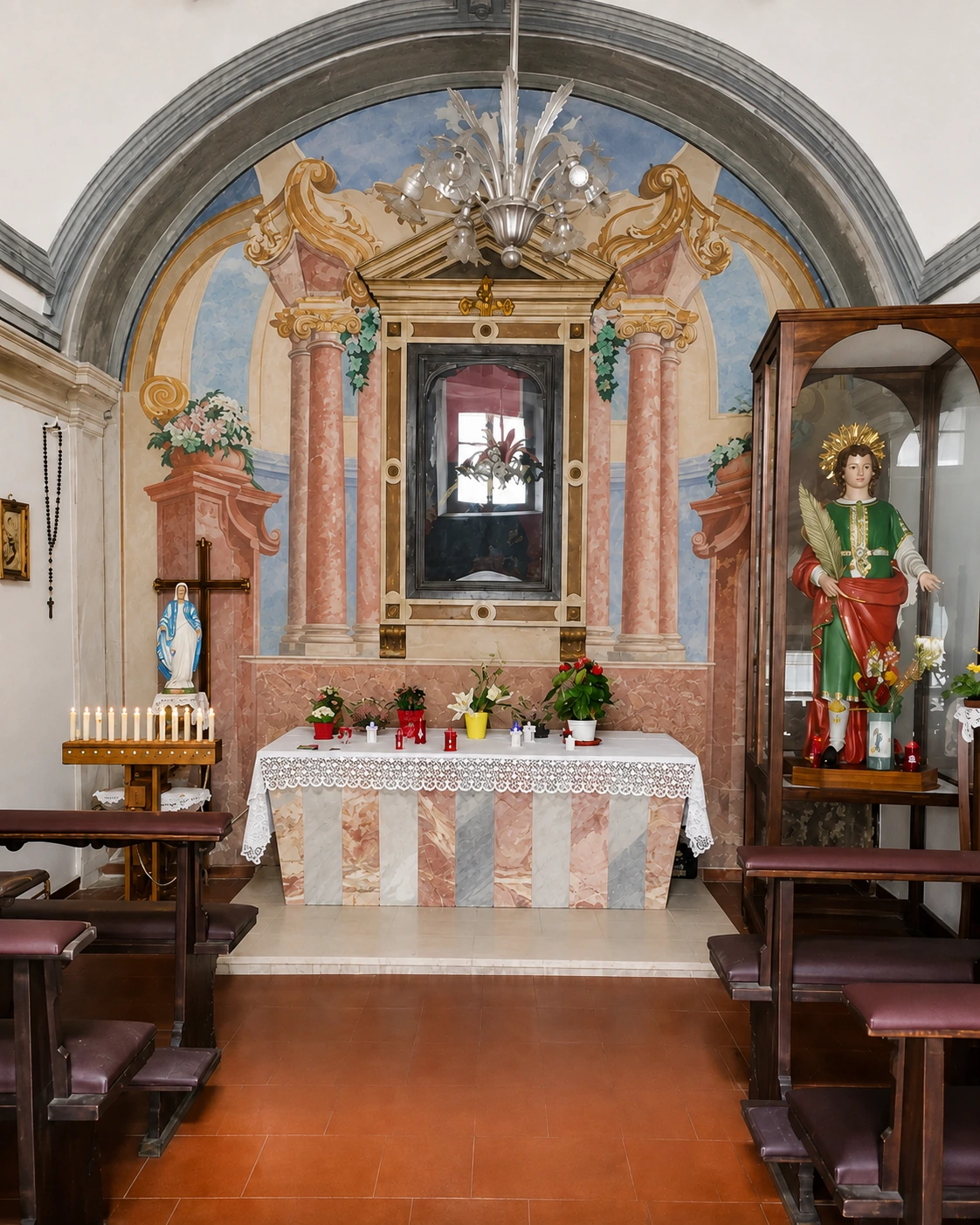
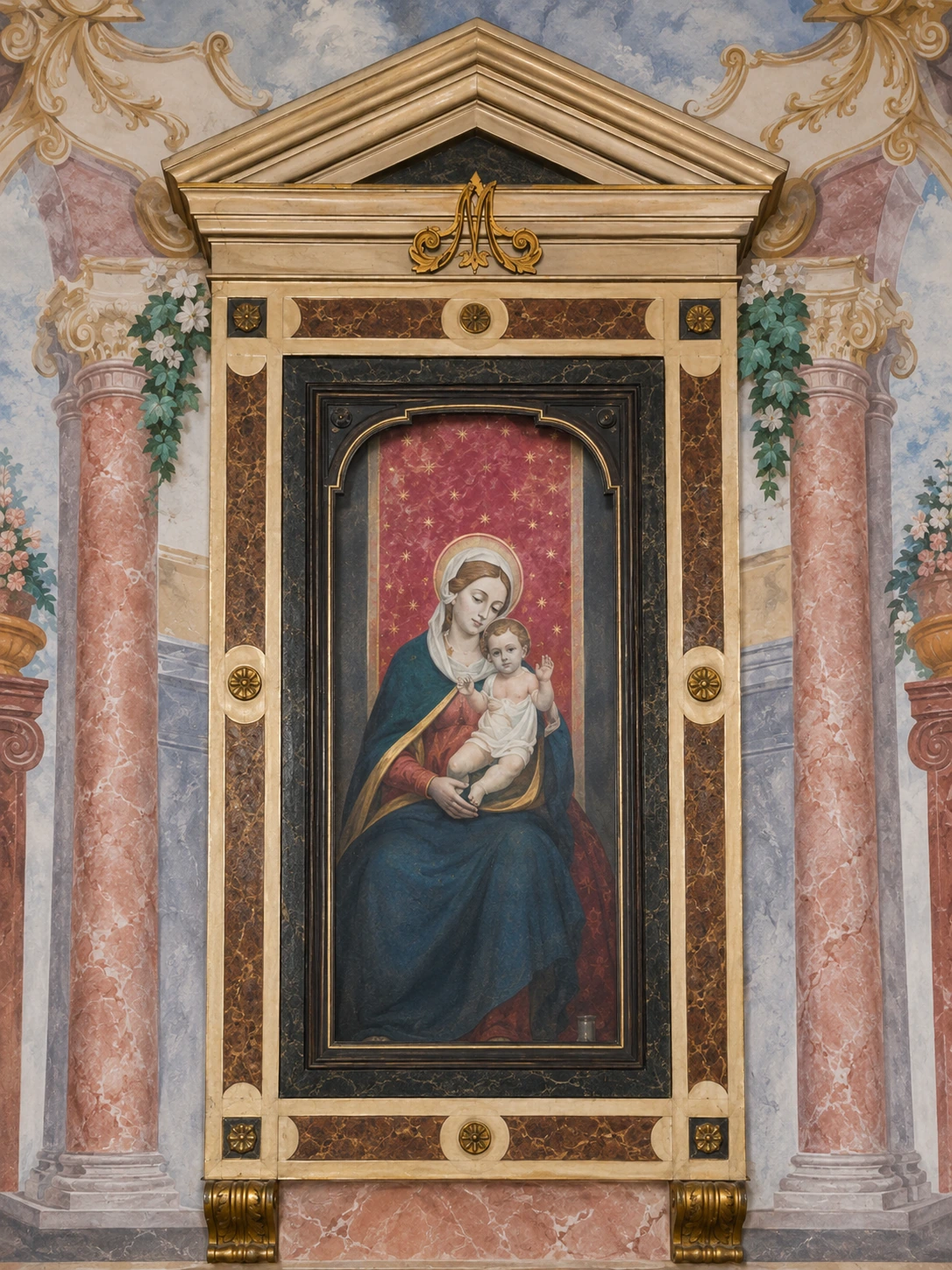
Several Masses were celebrated there each day. Above the altar was an image of the Virgin Mary nursing the Infant Jesus, and beside it that image of St John which had become famous for its alleged miracles. The walls of the small oratory were covered with votive offerings made by the faithful.
From the 17th to the 18th century
The Oratory Through the Ages
In 1618, when Cardinal Taverna visited, Mass was celebrated in the oratory only occasionally for devotional purposes. The vestments and liturgical furnishings were kept in a chest, and it was the curate’s wish to move them all to the parish house to prevent theft.
In 1658, a frame of carved plaster could be seen around the image of the Madonna. A bell tower with a bell had also been erected. In the 18th century, the oratory was fitted with a portico that also overhung the adjacent Via della Riotta.
In the 1960s, the ancient image of the Madonna was replaced with a modern painting.


Today
Life at the little church
At present, Mass is celebrated only on 5 August, and during the month of May a prayer group gathers there to recite the Rosary. The statue of san Pantaleone, patron saint of Limbadi, is kept here; it came to the parish with the large community that moved from Calabria to Novara.