
Our Lady of Lourdes
The Sanctuary of Our Lady of Lourdes at Cascinone
The story of a church built to support the growth of a new part of the neighbourhood.

The origins
The initial idea: 1957
The initial idea to build a church in the Cascinone area dates back to 1957 and is documented in the second issue of the ‘Nuova Campana di Sant'Agabio’:
the initiative was the result of a careful study carried out by the parish priest, Monsignor Eugenio Lupo, into the possibility of a large-scale building development in the outermost area of the parish, known as Cascinone.
On Friday 29 January 1965, again in the “Campana”, another article appeared entitled: Cascinone, almost a village. in which Giovanni Baraggioli described a village in the Novara lowlands, with its bell tower, schools, farmhouses and hard-working people, along with its customs and religious traditions, before making the following observation: Cascinone also has these village-like characteristics, though it lacks one essential element: the church.
In fact, there was a building at number 64 Corso Milano which had served as a church since 1957: it was kept in good order by the local people, and Mass was celebrated there on Sundays. But the space was so cramped that the congregation were crammed in beyond belief and were often forced to remain outside as well. Hence the question posed by the columnist to the then parish priest, Monsignor Eugenio Lupo, as to whether there was any hope of a new church being built.
The project
Entrusting the matter to Our Lady of Lourdes
Monsignor Lupo replied by urging everyone to entrust themselves to Our Lady of Lourdes, so that she might pave the way for a solution to the problem of the church at Cascinone. On the feast day of Our Lady of Lourdes, the parish priest announced that, just an hour before the prayer, a loan had been granted and that they could now begin the formalities, seek out a contractor and request quotations.
Once the plans had been drawn up, they were displayed in the little church so that people could view them and offer their comments: five panels presented the central plan of the new church, showing the roof and dome, the façade, the side elevation and the interior. The day after the panels were put on display, the men and young people were invited to a meeting to give their views.
It was decided to set up a committee divided into two sections: an honorary section, comprising all the heads of households in the area; and an executive section, consisting of ten people. It was subsequently proposed to include a few women in the working committee as well, to represent the female population who, after the first few meetings, had remarked: ‘If we had been invited, rather than the men, the church would be well and truly finished by now.’
The first difficulties arose. The Cascinone area was classified as ‘semi-intensive’, that is, an area where buildings were required to comply with specific regulations: setbacks and floor-to-volume ratios.
The problem lay in the fact that the plot of land on which the church was to be built was not large enough, and the required distances from the property to the west and from the road were not being met. The problem was resolved by purchasing further land. The church’s façade would face south, running parallel to Corso Milano.

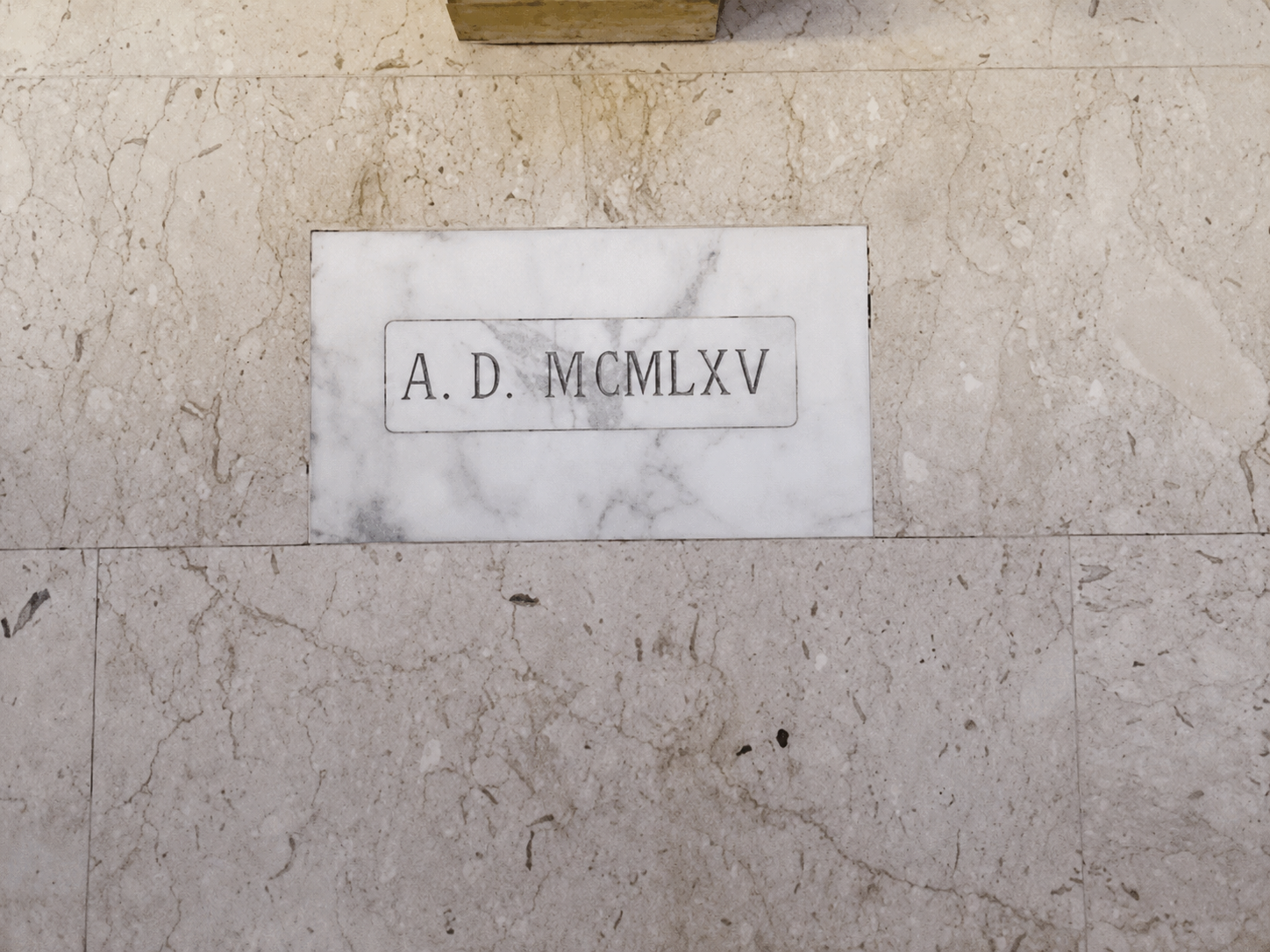
12 June 1965
The laying of the foundation stone
The laying of the foundation stone, initially scheduled for 31 May to coincide with the end of the Marian month, took place on Saturday 12 June 1965. The local people marched in procession with the statue of the Virgin Mary from the parish church to Via Cervina, where the sanctuary was to be built. The Vicar General, Monsignor Vittorio Piola, President of Oftal, blessed the site and the foundation stone, before reading aloud the parchment that was to be set into the wall.
It bore the following words:
In the year of our Lord one thousand nine hundred and sixty-five
on the twelfth day of June
amidst rosaries and joyful songs
the Parish of Sant'Agabio in Novara
spiritually united with His Holiness Paul VI
to His Excellency Bishop Placido Maria Cambiaghi
offers to the Lord, through the intercession of Our Lady of Lourdes
this church where the people of God may find the tent of health, the house of love, the abode of peace.
On this peaceful eve of Heaven, ‘Lord, hear the prayers of your people and grant that all who enter this church may receive the graces they ask for’.
1966–1967
The construction of the Sanctuary
Monsignor Piola concluded by imparting his blessing and recalling the painful sacrifice of the sanctuary’s architect, who had been widowed.
In January 1966, after a process that the parish priest himself described as a veritable odyssey, work had finally begun.
The church had been designed by the surveyor Francioli, with the approval of the architect Ceresa, and was built by the S.l.C.E. construction firm.
On 31 May 1966, the conclusion of the Marian month took place in a truly evocative setting: following a torchlight procession from the parish church to Via Cervina, the parish priest celebrated Mass within the walls of the sanctuary, which had been cleaned and decorated with flowers for the occasion.
The sky served as a vault for the church, which was still without a roof. The parish priest expressed his wish to place the tabernacle within the arms of the statue of Our Lady.

Completion
From fundraising to the blessing
As regards the financing of the project, several initiatives were planned: the first was a collection of donations via an envelope distributed to all families.
Subsequently, to pay for the building work, the estimated cost of which amounted to six million lire, it was decided to launch a loan scheme amongst the families of Sant'Agabio and local businesses. The loan carried an interest rate of 6 per cent and had a maximum repayment term of three years.
By September 1966, the vaulted roof had been completed and it was hoped that the church could be consecrated by the end of November, so that it would be ready for the Feast of the Immaculate Conception.
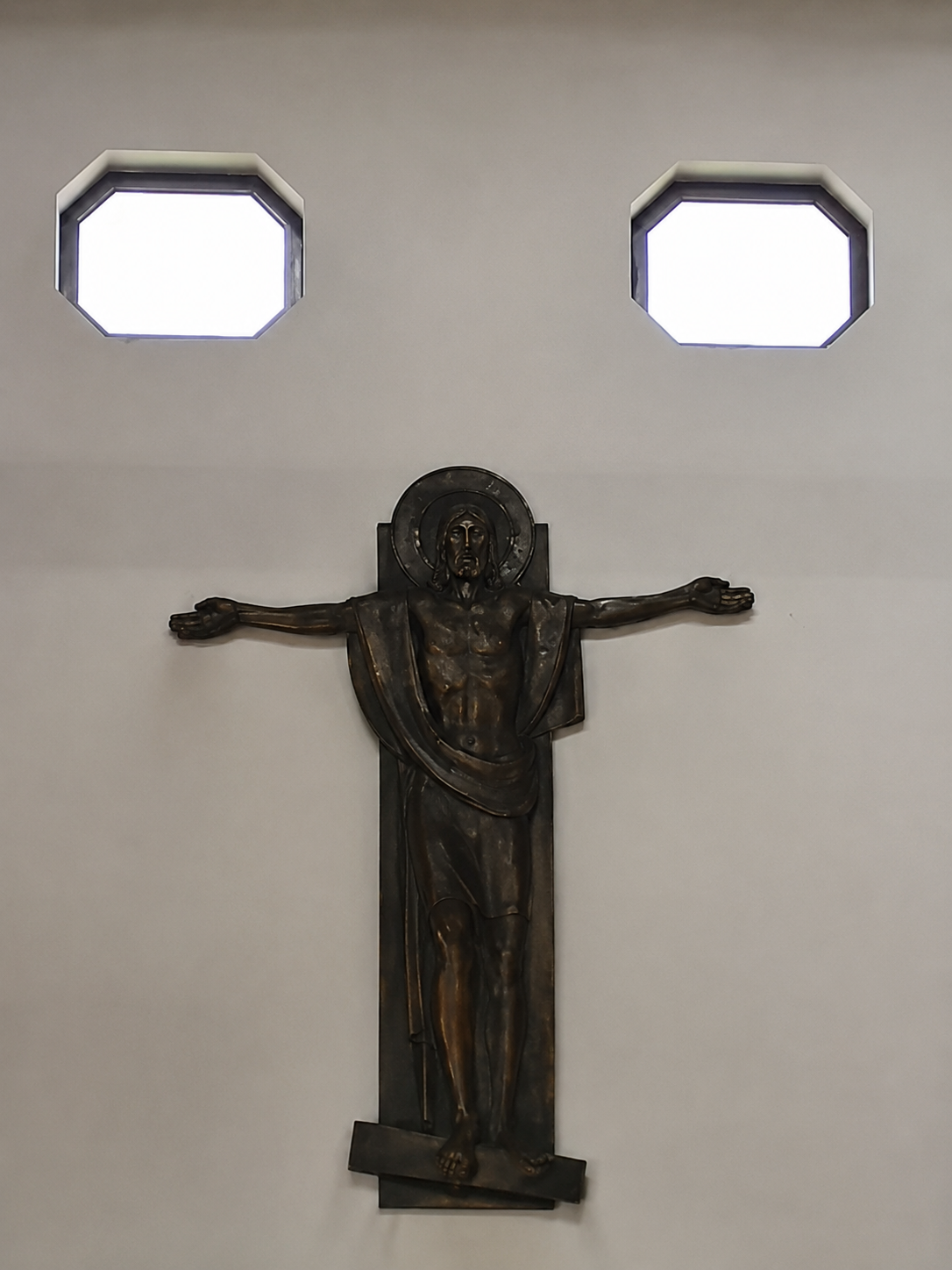
On 11 February 1967, the bishop consecrated the new church and celebrated Mass there; the following Monday, work began on the marble flooring, carried out by the Lombi company. The tabernacle was then installed, along with the images of the Virgin Mary, Jesus and Saint Bernadette – copper works by Mr Barberi of Castelletto Ticino.
A presence in the neighbourhood
A meeting place and a point of reference
The construction of the sanctuary proved providential due to the neighbourhood’s significant expansion. The area of the old Cascinone has been absorbed by the new developments; new streets have sprung up, along with social housing estates and schools. The church has thus become a meeting place and a point of reference for the local community.
The Sanctuary today
Images
